
Beneath the surface of our daily lives lies a microscopic world hidden from the naked eye. From the texture of a leaf to the intricate design of an insect’s eye, the tiniest details often hold the greatest wonders of nature. But to truly see them, a magnifying glass or a traditional microscope simply isn’t enough.
This is where the stereo microscope comes in—a tool designed not just to enlarge, but to reveal depth, structure, and the full complexity of the miniature world around us.
What Is a Stereo Microscope?
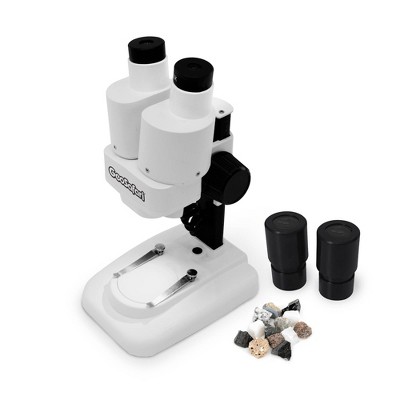
Also known as a dissecting microscope, a stereo microscope is a type of optical microscope that allows users to view objects in three dimensions. Unlike compound microscopes, which are commonly used to observe thin slices of cells or bacteria on glass slides, stereo microscopes are designed for viewing solid objects—their surface details, textures, and physical structure.
This is achieved through two separate optical paths—each eye sees the object from a slightly different angle, and the brain combines the two images into one, giving a realistic sense of depth. In other words, you don’t just see what’s there—you understand how it’s built.
What Can You Do with It?
Many people assume that stereo microscopes are only for scientists in lab coats. In reality, they’re used in far more settings than you might imagine, from classrooms to repair benches to artist studios.
Here are just a few common uses:
- Education: In biology labs, students can explore leaves, insects, minerals, and other natural specimens up close, gaining a new appreciation for the world around them.
- Industrial Inspection: Technicians use stereo microscopes to check solder joints on circuit boards, inspect tiny mechanical parts, or ensure product quality.
- Jewelry and Artifact Analysis: Jewelers and archaeologists alike rely on stereo microscopes to identify flaws, study craftsmanship, or examine the fine details of ancient objects.
- Scientific Research: Especially in entomology, botany, and dissection work, where it’s critical to observe and sometimes manipulate whole specimens.
- Hobbies and Crafts: From watch repair and miniature painting to model making and wood carving, stereo microscopes help hobbyists refine their craft with precision.
So no, it’s not just for scientists. It’s a tool of discovery for anyone who loves detail.
Why Choose a Stereo Microscope over Other Types?
With so many microscopes out there, you might wonder: why stereo?
The key lies in function and depth perception. While compound microscopes offer much higher magnification (often up to 1000x), they provide a flat, two-dimensional view. They’re excellent for examining bacteria, blood cells, or microscope slides—but not ideal for viewing the full structure of larger, solid objects.
Stereo microscopes, by contrast, typically offer magnification in the 10x to 80x range. That may sound modest, but the larger working distance, realistic depth, and wide field of view make them perfect for tasks where you not only need to observe, but also interact—like dissecting a specimen or repairing a microchip.
Think of it like this: compound microscopes are for exploring within things; stereo microscopes are for exploring the outside.
What It Feels Like to Use One
Looking through a stereo microscope for the first time can be a surprisingly emotional experience. Take a common coin, for example. Under normal lighting, it’s flat and metallic. But under the microscope, it becomes a landscape—cracks, scratches, edges and ridges you’ve never noticed before come into view.
Now imagine placing an ant or a tiny flower petal on the stage. Suddenly, you’re no longer just observing—you’re immersed in a miniature world. The detail is so rich that it feels like stepping into a high-definition, real-life nature documentary, except you’re the cameraman.
It’s not just about seeing better—it’s about seeing differently.
Choosing the Right Stereo Microscope
If you’re just getting started or want one for home use, here are a few things to consider:
- Magnification: Most everyday tasks only require 10x to 40x magnification. Don’t be tempted by high numbers unless you have a specific need.
- Zoom vs Fixed: Some stereo microscopes have fixed magnification (e.g.10x/30x), while others offer zoom capabilities (e.g.7x–45x). Zoom gives you more flexibility, but usually comes at a higher price.
- Lighting: A good stereo microscope should include both top (incident) and bottom (transmitted) lighting options to illuminate your subject from different angles.
- Working Distance: This refers to the space between the objective lens and your sample. A longer working distance allows room for tools like tweezers or scalpels during observation.
- Budget: Entry-level stereo microscopes start at around $100–$300, while professional models can cost several thousand. Pick what fits your purpose best.
I got a website called lakimi, i usually buy some toys on it. It is very convenient and cost-effective.Also,it has a wide range of tools to choose from,which can meet all you needs.So if you
Final Thoughts: Curiosity Deserves a Closer Look
In an age where we’re overwhelmed with digital content, it’s easy to forget that real wonders lie just beneath the surface of everyday objects. The stereo microscope is more than a scientific device—it’s a gateway to curiosity.
A leaf isn’t just green—it’s a network of veins and cells. An insect isn’t just a bug—it’s a biomechanical marvel. A coin isn’t just change—it’s a timeworn artifact full of character.
Whether you’re a student, a maker, or someone who just loves to explore, a stereo microscope can reignite your sense of wonder.
Because sometimes, the biggest surprises come from looking a little closer.