
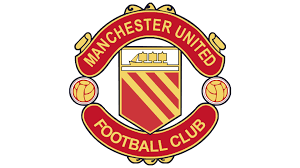
When people think of Manchester United, they often imagine the roar of Old Trafford or the iconic red jerseys. Yet beyond players and stadiums lies another enduring element of identity: the Manchester United logo and symbols. Football logos are not simply decorative; they embody history, culture, and ambition.
The Manchester United crest, featuring elements like the ship and the Red Devil, is a visual narrative of the club’s journey. To appreciate Manchester United’s evolution into a global powerhouse, one must first understand how its logo and symbols developed and why they continue to matter.
Origins of the Manchester United Crest
The first crest associated with the club came after its transition from Newton Heath to Manchester United in 1902. Unlike today’s recognizable badge, these early versions were less standardized. Designs often drew inspiration from the Manchester City Council coat of arms, which featured a ship to symbolize the city’s industrial and trading heritage.
By the mid-20th century, the crest evolved to include imagery that blended civic pride with football identity. This fusion of local symbolism and sporting ambition created a foundation for one of football’s most recognizable emblems.
Newton Heath’s Early Symbolism
Before Manchester United, Newton Heath LYR Football Club had no official crest in the modern sense. Instead, its identity was tied to railway symbolism and the name itself, which directly referenced the Lancashire and Yorkshire Railway. The imagery reflected the industrial Manchester setting in which the club was born.
Step by step, the lack of a defined crest mirrored Newton Heath’s financial struggles and instability. When the club rebranded as Manchester United, the opportunity arose to embrace stronger symbols that projected ambition. The transition was therefore not only financial but also symbolic, with the introduction of a more formalized crest.
Key Elements of the Crest Design
Over the decades, the Manchester United logo incorporated a variety of visual elements, each carrying distinct meaning. These symbols tell the story of the club’s roots, values, and aspirations.
Among the most significant elements are:
- The Red Devil: a fierce emblem of strength and competitive spirit.
- The Ship: a nod to Manchester’s industrial and trading history.
- The Shield and Banner: representing unity and pride.
Together, these features established a visual identity that fans could rally behind and rivals could instantly recognize.
The Red Devil Emblem
The Red Devil is perhaps the most iconic part of the Manchester United logo. Introduced in the 1960s, it replaced earlier references to a simple footballing crest. The symbol was inspired by Salford Rugby Club, nicknamed the “Red Devils.” Sir Matt Busby embraced the moniker for Manchester United, believing it captured the team’s intimidating and determined character.
The Red Devil became central because it aligned perfectly with the club’s ambition: resilience, dominance, and global recognition. Its presence on merchandise, programs, and banners gave Manchester United a distinct personality unmatched by most rivals.
The Ship and Industrial Heritage
The ship, borrowed from the city of Manchester’s coat of arms, symbolizes trade and industrial heritage. Positioned prominently on the crest, it ties the club to the city’s history as a global hub during the Industrial Revolution.
This connection demonstrates how the Manchester United logo and symbols intersect with broader cultural identity. The ship is not about football alone—it is a reminder of Manchester’s role in shaping modern industry and commerce, linking civic pride to sporting pride.
Evolution of the Logo Through the Decades
The crest has undergone several redesigns to adapt to changing times.
- 1940s–1950s: Variations inspired by the city coat of arms.
- 1960s: Introduction of the Red Devil as the central icon.
- 1970s–1990s: Refinements made the badge more modern and commercially viable.
- 2000s onward: Simplified logo emphasizing clarity for global branding.
Each iteration retained core elements like the ship and the Red Devil while refining aesthetics. This continuity ensured fans could always identify with the logo, even as designs modernized.
Modern Branding and Global Recognition
Today, the Manchester United logo is more than a football crest—it is a global brand symbol. Found on merchandise from shirts to mugs, the logo generates millions in revenue annually. Its recognition extends far beyond football fans, making it one of the most powerful sports brands worldwide.
Global searches for the crest reflect its widespread appeal. From Asia to the Americas, supporters wear the logo as a symbol of loyalty. The badge unites fans in digital communities, video games, and international tournaments, reinforcing its role as both cultural and commercial identity.
Cultural and Fan Significance of the Logo
The crest is more than corporate branding; it is deeply personal for fans. To supporters, the Manchester United logo symbolizes family tradition, city pride, and shared memories. Fans tattoo it on their bodies, hang it in their homes, and display it on flags at Old Trafford and abroad.
This cultural weight bridges football with personal identity. For many, wearing the logo is a way to connect with a global community of supporters. Today, fans also extend this engagement digitally—exploring stories, updates, and football experiences on platforms like ufabet เข้าสู่ระบบ 168, where cultural meaning meets digital access.
Comparisons with Rival Clubs’ Logos
Contrasting Manchester United’s crest with those of rivals highlights its uniqueness.
- Liverpool features the Liver Bird, tied to maritime heritage but less aggressive than the Red Devil.
- Manchester City incorporates a ship too, but with a cleaner, more civic style.
- Arsenal uses a cannon, a straightforward nod to military heritage.
Compared with these, Manchester United’s crest combines intimidation (the Devil) with civic pride (the Ship), balancing fearsome imagery with historical connection. This duality strengthens its identity among football logos.
The Logo in Modern Digital Culture
In digital spaces, the Manchester United logo thrives. From official social media accounts to fan-created content in eSports and FIFA video games, the crest is reproduced millions of times daily. Memes, avatars, and highlight reels ensure the Red Devil and ship live in new formats that keep them relevant.
This adaptation demonstrates the flexibility of the crest: it remains timeless while evolving with new technology. Its constant reinvention provides fans with a sense of continuity and belonging in the digital age, underscoring its cultural resilience.
Legacy of Manchester United’s Logo and Symbols
The history of the Manchester United logo and symbols reveals more than graphic design. It reflects resilience, ambition, and cultural depth. From Newton Heath’s modest identity to today’s globally recognized Red Devil, the crest embodies the journey of a club and a city.
This legacy continues to inspire modern fandom. Supporters engage with the club’s history not only in stadiums but also through digital experiences, merchandise, and communities. For those seeking to explore football further, platforms like สมัคร ufabet offer spaces where tradition and modern entertainment intersect.
In summation, the Manchester United logo is more than an emblem—it is a living narrative. Rooted in industrial heritage, strengthened by competitive ambition, and adapted for a digital world, it symbolizes a legacy that is both historical and timeless.