
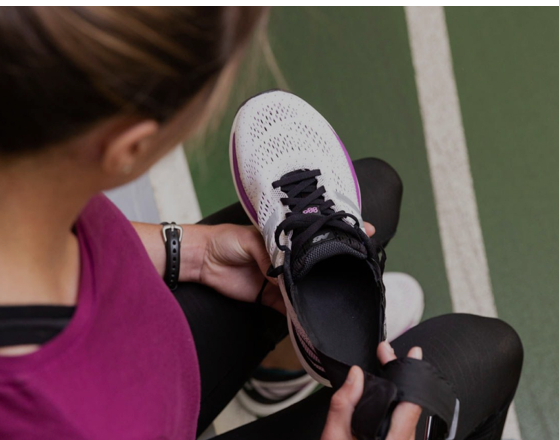
The way we walk, run, and move reveals much more than we often realize. Every step tells a story about balance, alignment, pressure distribution, and muscular efficiency. For decades, researchers, coaches, and clinicians have worked to capture this information, but traditional gait labs presented significant challenges: bulky setups, restrictive environments, and expensive equipment.
This is where the insole pressure sensor has changed the game. By integrating smart sensors directly into insoles, systems like the Intelligent Insoles | Pro from XSENSOR allow gait and plantar pressure to be measured outside of the lab—accurately, consistently, and in real-world environments.
In this article, we’ll take a deep dive into what an insole pressure sensor is, how it works, why it matters for sports performance, injury prevention, and biomechanics research, and how it’s setting a new standard for field-ready human performance measurement.
What Is an Insole Pressure Sensor?
An insole pressure sensor is a thin, flexible device embedded inside a shoe insert. It contains dozens—or even hundreds—of tiny sensing points, known as sensels, that measure the distribution of pressure across the foot as a person stands, walks, or runs.
Unlike lab-based force plates or treadmills, an insole pressure sensor moves with the athlete or patient. This allows data to be collected during real-world activities such as sprinting, jumping, or even playing a full soccer match. The result is highly valuable: natural gait analysis in natural environments.
Why Measuring Plantar Pressure Matters
Understanding plantar pressure—the distribution of force across the sole of the foot—offers insights into multiple domains:
- Sports performance optimization – Identifying imbalances, inefficient movement patterns, or excessive loading that could limit speed, agility, or endurance.
- Injury prevention – Spotting dangerous pressure points that could lead to stress fractures, plantar fasciitis, or chronic overuse injuries.
- Rehabilitation monitoring – Tracking recovery progress after surgery or injury by monitoring how pressure and gait change over time.
- Clinical diagnostics – Detecting early signs of conditions like diabetic foot ulcers by monitoring abnormal plantar loading.
By embedding measurement directly into footwear, insole pressure sensors deliver lab-quality insights in the field—a critical advancement for both researchers and practitioners.
The Challenge with Traditional Gait Labs
Before the rise of insole pressure sensor technology, most gait analysis required:
- Expensive force plates embedded in lab floors.
- Time-consuming recalibration and setup.
- Restricted environments that did not mimic real-world conditions.
While these systems were accurate, they suffered from one major drawback: they couldn’t capture natural gait outside the lab. Athletes perform differently on a treadmill compared to a soccer field. Patients walk differently when being observed in a controlled environment compared to their daily lives.
This gap made it difficult to capture authentic, reliable data—until portable insole pressure sensor systems came along.
Introducing the Intelligent Insoles | Pro
Among the most advanced solutions available today is the Intelligent Insoles | Pro, developed by XSENSOR Technology Corporation. This cutting-edge plantar pressure and gait measurement system is built specifically for athletic coaches, sports performance professionals, and biomechanics researchers.
Key Highlights:
- Smart Technology – Durable, high-resolution sensors embedded in flexible insoles.
- Portable Performance – Collects accurate gait and plantar pressure data in the field, without limiting natural motion.
- Time-Saving Design – Avoids setup and recalibration headaches; ready to use out of the box.
- Feature-Rich Software – Provides high-resolution visualizations, side-by-side comparisons, and AI-powered analysis tools.
In short: a complete system that moves gait labs into the real world.
Smart Technology That Works Everywhere
The hallmark of the Intelligent Insoles | Pro is its ability to work in natural environments without compromising accuracy.
- Durable hardware ensures the sensors remain reliable even under continuous use in research or athletic training.
- Wireless connectivity means athletes don’t notice the sensors—they run, jump, and perform naturally.
- Factory calibration guarantees stability, so researchers don’t lose valuable time recalibrating before each session.
This combination of ruggedness, accuracy, and usability makes the insole pressure sensor ideal for both high-level sports and rigorous research applications.
Optimizing Sports Performance with Insole Pressure Sensors
For coaches and performance specialists, the ability to measure plantar pressure in real time is revolutionary.
- Fine-tuning technique – A sprinter’s take-off, a basketball player’s jump shot, or a soccer player’s stride can all be optimized by analyzing pressure distribution.
- Preventing overuse injuries – Detecting excessive loading on certain parts of the foot helps prevent shin splints, stress fractures, or Achilles tendon issues.
- Enhancing recovery – Athletes returning from injury can be monitored more closely to ensure their gait patterns normalize before returning to competition.
This kind of data-driven coaching was once only possible in elite labs. Today, insole pressure sensors bring it to the field, court, and track.
Durable Hardware, Minimal Setup
A key benefit of the Intelligent Insoles | Pro is its plug-and-play usability.
- Quick setup – No need for hours of recalibration.
- Rugged electronics – Built to withstand sweat, impact, and continuous athletic activity.
- Extended battery life & on-board memory – Supports autonomous data collection at high speeds.
This makes the technology particularly appealing for large-scale studies, where dozens of athletes or participants may need to be monitored over extended periods.
Advanced Plantar Pressure & Gait Analysis Software
Hardware is only half the equation. The other half lies in powerful, intuitive software. XSENSOR’s Pro Foot & Gait software transforms raw sensor data into clear, actionable insights.
- High-resolution heatmaps visualize foot pressure in real time.
- Side-by-side comparisons allow coaches to evaluate pre- and post-training sessions.
- Summary statistics provide quantitative data for confident decision-making.
- Report generation makes it easy to share findings with athletes, patients, or other researchers.
With these tools, the insole pressure sensor system becomes a complete biomechanical analysis solution.
Technical Specifications & Performance
The Intelligent Insoles | Pro deliver lab-grade precision in a field-ready package:
- Accuracy: ±5% full-scale error.
- Resolution: Up to 235 sensels per foot.
- Pressure Range: 0.7–88.3 n/cm² (1–128 psi).
- High-speed collection: Up to 150 Hz.
- Battery & Memory: Long battery life with onboard storage for autonomous sessions.
- Integrated IMU (Inertial Measurement Unit): Adds motion data for deeper analysis.
Different models (High-Resolution, Lite, Narrow) ensure a fit for various shoe sizes and applications, from clinical research to elite sports.
Applications Beyond Sports
While sports performance is a natural application, insole pressure sensors extend far beyond athletics:
- Medical Rehabilitation
- Tracking gait recovery after hip or knee replacement.
- Monitoring progress in stroke or spinal cord injury patients.
- Diabetes & Foot Health
- Detecting abnormal pressure points that may lead to ulcers.
- Preventing costly complications through early intervention.
- Ergonomics & Workplace Safety
- Studying posture and fatigue in workers who stand for long periods.
- Designing safer footwear for industrial environments.
- Academic & Biomechanics Research
- Providing repeatable, reliable data for thousands of gait cycles.
- Expanding understanding of human movement across populations.
How AI Enhances Gait Analysis
The latest generation of insole pressure sensors integrates AI-powered tools to improve analysis.
- Pattern recognition – Identifies abnormal gait patterns faster than manual review.
- Predictive insights – Helps forecast potential injuries before they occur.
- Automated reporting – Reduces researcher workload while maintaining accuracy.
AI doesn’t replace human expertise—it amplifies decision-making by turning complex biomechanical data into actionable insights.
Benefits at a Glance
Using an insole pressure sensor system like the Intelligent Insoles | Pro offers:
- Accurate, repeatable measurements in real-world environments.
- Time efficiency with minimal setup.
- Rich data sets combining plantar pressure, IMU motion data, and AI-powered insights.
- Portability for field testing, away from labs.
- Durability for long-term use in sports and research.
The Future of Gait & Motion Research
As technology continues to evolve, insole pressure sensors will only become more central to human performance research. We can expect:
- Smaller, lighter sensors with even higher resolution.
- Cloud-based platforms for real-time data sharing across teams.
- Integration with wearables like heart rate monitors and GPS trackers for holistic athlete monitoring.
- Expanded medical adoption in rehabilitation clinics and preventive healthcare.
Ultimately, the ability to capture natural gait in natural environments will shape not just how athletes train but how clinicians diagnose and how researchers advance biomechanics knowledge.
Conclusion
The insole pressure sensor has redefined what’s possible in gait and plantar pressure analysis. No longer confined to expensive labs, biomechanics data can now be collected on the field, in the clinic, or in everyday life.
With solutions like XSENSOR’s Intelligent Insoles | Pro, coaches, researchers, and clinicians gain access to durable, high-resolution, AI-powered tools that capture authentic human movement. The result is better performance, safer athletes, faster rehabilitation, and a deeper understanding of how we move.
Whether you’re an athletic coach looking to prevent injuries, a researcher studying gait mechanics, or a clinician monitoring patient recovery, the insole pressure sensor is a technology that brings science closer to real life—step by step.